
Media
Time to Control: Patrick Sheehan on the CMS ACCESS Model, Remote Monitoring, and Chronic Care at Home

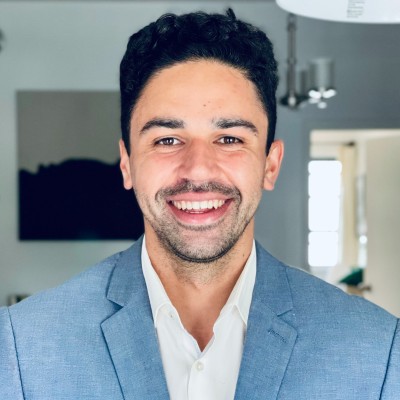
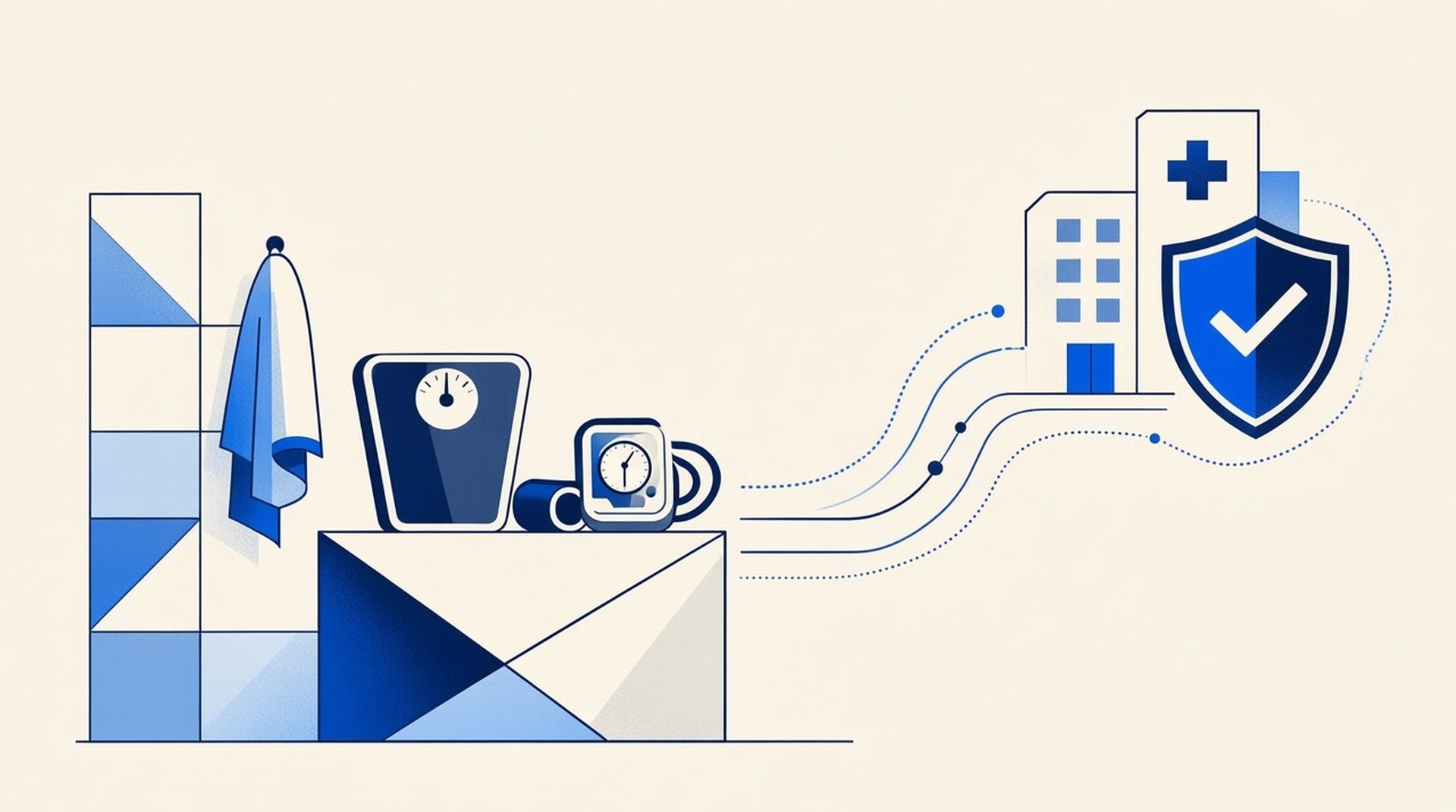
Based on Episode 12 of the Rainfall Health Podcast: Patrick Sheehan, Vice President of Value-Based Care at Withings Health Solutions, on the CMS ACCESS model, remote patient monitoring, and chronic care at home — in conversation with Rainfall Health founder and CEO Ahmed “Eddie” Qureshi.
Patrick Sheehan works at the intersection of technology and care delivery, focused on virtual and at-home services for people living with chronic conditions. As VP of Value-Based Care at Withings Health Solutions, he partners with risk-bearing organizations to design and scale programs that improve affordability, outcomes, and the care experience — including a MedStar Health partnership that brings connected devices into concierge primary care, and Withings’ acceptance into the CMS ACCESS model for technology-enabled chronic care for Medicare beneficiaries.
For hospital population-health and virtual-care leaders, the conversation is less about another device vendor and more about where Medicare is willing to pay for outcomes, how at-home data flows back to the health system, and what changes when a connected-device company bills as a Medicare Part B supplier.
Why Did Value-Based Care Pull a Technology Leader Into Risk-Bearing Work?
Sheehan traces his path to Dartmouth in the early 2010s, when the Affordable Care Act took hold and the campus was one of the policy hubs for accountable care organizations. Better aligning incentives and spurring innovation stuck with him — first in a Medicaid ACO, then with virtual-care companies in the late 2010s and early 2020s, and in 2025 to Withings to build clinical programs on top of a full technology stack.
I believe that technology is the greatest enabler of value-based care.
— Patrick Sheehan
He is candid that the broader value-based care movement has stalled, and that what excites him now is what AI can do to accelerate it again. Eddie Qureshi’s mirror story — a mother still practicing in rural Arkansas, where neighbors drive hours to reach the full care continuum — is why Rainfall Health exists, and why both guests agree technology has to be how care scales.
What Did Withings Build From a Bathroom Scale to a Medical Group?
Withings started with a simple idea in 2008 and 2009: step on a device at home and see biomarkers on a smartphone. Sixteen to seventeen years later, the stack layers devices, data intelligence, and — in 2026 — Withings’ own medical programs under the CMS ACCESS model.
This is really the first time that we have this fully vertically integrated technology stack delivering care.
— Patrick Sheehan
Sheehan cites roughly 15 million users worldwide, about 5 million in the U.S., and on the order of one million U.S. users age 65 and older — a consumer footprint that becomes the front door when medical programs stack on the same relationship.
How Is the CMS ACCESS Model Different From Fee-for-Service Remote Monitoring?
Before ACCESS, Sheehan argues, integrating technology into healthcare was hard because payment followed fee-for-service activity and distribution ran entirely through the patient-physician relationship. Technology, he says, is not an activity-based sector — it is about outcomes and impact.
ACCESS, launched by CMMI, moves reimbursement toward clinical outcomes (blood pressure, weight, cholesterol improvement) rather than activity volume or total-cost contracts alone. Withings can reach Medicare beneficiaries directly, and beneficiaries choose whether to join — a second pillar alongside outcomes payment.
In my perspective, the biggest bet on value-based care since the creation of MSSP 10 plus years ago.
— Patrick Sheehan
Withings now bills as a Medicare Part B supplier in that outcomes-based frame — analogous, in Sheehan’s wording, to how a cardiologist or primary care physician bills Medicare — while partnering with organizations that carry utilization and cost risk.
Before ACCESS
Under ACCESS
Paid for
Before ACCESS
Activity — visits, calls, and billable services.
Under ACCESS
Clinical outcomes — blood pressure, weight, cholesterol, and related targets.
Reached through
Before ACCESS
The patient-physician relationship only.
Under ACCESS
Direct outreach to beneficiaries, who choose to enroll.
Withings’ role
Before ACCESS
Technology vendor to providers.
Under ACCESS
Medicare Part B supplier delivering guideline-directed chronic care at home.
Why Is Integration Back to the Health System Non-Negotiable?
Eddie Qureshi raised a provocative framing Sheehan agreed with: the healthcare system is not broken so much as doing what fee-for-service designed it to do — separate pieces delivering care in silos. Under ACCESS, Withings manages hypertension, prediabetes, high cholesterol, obesity, ASCVD, and the cardiovascular-kidney-metabolic (CKM) spectrum, but integration back to primary care and the health system is a must-have, not a nice-to-have.
Scope includes labs and medications with one purpose: guideline-directed care. The same EHR integrations built for remote monitoring now carry care coordination; patients are co-managed with their PCP. On a payer credentialing call, Withings’ answer was none of the above — not primary, specialty, or urgent care, but a technology-based care provider integrating back to the health system.
From the health system side, Qureshi argued CMMI is letting leaders architect relationships from the ground up — where data should flow and where care should go — rather than rip out legacy infrastructure first.
How Should Leaders Think About Patient Engagement Versus Clinical Intensity?
Qureshi’s counterintuitive point: responsive care often means engaging only as much as needed — at the right moments with the right data — not maximizing touchpoints. Sheehan connected that to AI automating onboarding and other administrative work that raises cost without improving outcomes, while surfacing FDA-cleared marker insights to patients and clinicians.
Clinical models built in a vacuum can work on paper, Sheehan said; what breaks is whether the patient wants the model and how multiple hardware pieces fit together for CKM conditions. Withings starts from consumer desire to understand oneself — body composition scales, blood pressure monitors — then layers medical care on top.
Every decision at the end of the day is going to be made by a clinician. Every decision is going to be made by a patient. We’re just using AI to make that process more seamless and also surface the right information at the right time.
— Patrick Sheehan
Why Does FDA Clearance Change the Clinical Toolbox?
Sheehan drew a bright line between wellness devices and FDA-cleared hardware. A wellness device, he said, limits what a patient can safely do with the data; clearance expands the toolbox from “here is what you can do” to “here is what we can do together” — including titrating hypertension therapy on trusted data.
Withings published work with the Mayo Clinic on predicting GLP-1 outcomes from early body-composition data — shown to clinicians for titration decisions and to keep patients at the center of their goals. Eddie Qureshi connected Rainfall’s episode-bound care management and AI voice outreach (76 languages) to the same principle: standards that translate data into action while keeping the patient and clinician in the center.
Who Should Health System Executives Engage at the Table?
Withings works at population health and virtual-care/digital-health levels. One track is heart-failure and hypertension remote monitoring with health system partners — integrating data cleanly and innovating hardware for adherence pain points (for example, symptom surveys on a blood pressure monitor lifting adherence from roughly 30–35% through legacy portals to about 89% in Withings’ programs).
Fee-for-service organizations, Sheehan noted, sometimes see efficient retake workflows as reduced activity billing; value-based organizations see saved clinician time. As Withings delivers lower-acuity ACCESS care directly, partnerships focus on eligibility, benefit, and referral back — echo, cardiology — for patients who enter through Withings’ consumer base but need the system for higher-acuity needs.
MedStar’s concierge medicine partnership and FQHC use of the same technology for Medicaid populations illustrate Sheehan’s design goal: premium device experience across income bands, with FDA-cleared data to patient and clinician.
Sheehan reported strong activation: about 94% of enrollees in partner hypertension and heart-failure programs start collecting data; about 92% engage month over month in a clinically meaningful way; and more than 90% still use devices at 12 months.
Remote Monitoring, ACCESS, and “Time to Control”
Sheehan named time to control as a guiding principle — readmissions matter, but they are downstream of stabilizing heart failure and hypertension. Patient satisfaction and choice matter too; programs waive copays and compete on experience patients choose with their feet.
He distinguished hospital-tied remote monitoring for high-utilization patients (small panels, tight to the discharging hospital) from ACCESS for people moving down the risk spectrum who need preventive, low-cost, no-copay chronic care at home — a clarification he said has been valuable for partners.
Looking ahead, Sheehan pointed to ACCESS V2 in 2027–2028 and the integration between episode-based models like CMS TEAM and longitudinal ACCESS care — a transition-of-care question he and Qureshi teased for a future conversation. Qureshi closed with the familiar literature point: only about thirty percent of outcomes depend on clinical information; the rest happens at home — and home-based technology may finally stretch accountability into that remaining seventy percent.
Frequently asked questions
What is the CMS ACCESS model?
The ACCESS model is a CMS Innovation Center (CMMI) initiative that pays participating organizations for clinical outcomes in chronic care at home, allows direct outreach and patient choice to enroll, and treats qualified participants as Medicare Part B suppliers in an outcomes-based payment frame — distinct from traditional fee-for-service activity billing.
How is CMS ACCESS different from hospital remote patient monitoring?
Sheehan describes remote monitoring for recently hospitalized, high-utilization patients as small-panel, hospital-linked intensity. ACCESS targets lower-acuity prevention along the obesity–hypertension–diabetes risk spectrum with a low-cost structure and no copay for beneficiaries — formalizing two different access pathways.
What conditions does Withings address under ACCESS?
In the podcast, Sheehan lists hypertension, prediabetes, high cholesterol, obesity, ASCVD, and the CKM spectrum, with in-scope labs and medications aimed at guideline-directed care and co-management with PCPs.
Why does Withings emphasize FDA-cleared devices?
FDA-cleared data lets clinicians act on home readings — for example, titrating hypertension therapy — rather than limiting patients to wellness-style behavior changes alone.
Who should health systems call for a Withings partnership?
Sheehan names population health leaders and virtual-care/digital-health leaders as the two primary levels, with growing focus on eligibility and referral-back workflows as Withings enrolls patients who may not already know the system.
Download the eBook
Executive Policy eBook
Time to Control: CMS ACCESS and Chronic Care at Home
Companion guide to Episode 12 with Patrick Sheehan — outcomes payment, FDA-cleared RPM, and health system integration.
Download PDF
Get your free CMS TEAM analysis
Rainfall Health will review your 2024 and 2025 Medicare billings and build an individualized view of upside and downside under TEAM.
- Schedule a demo and free analysis: /schedule-a-demo/
- TEAM product: /team/
- CJR-X guide: /cjrx/
Further reading
- CMS TEAM Guide
- The Trust Gap: Cora Han on health data governance
- Closing Medicare’s how-to gap: Dr. Charlotte Yeh
- AI leverage in care coordination: Mark Adams
- Podcast and press
References
- Centers for Medicare & Medicaid Services, Center for Medicare and Medicaid Innovation. ACCESS Model — chronic care at home and outcomes-based participation overview.
- Withings Health Solutions. Insight Hub — Patrick Sheehan, Vice President of Value-Based Care (role and value-based care focus).
- Patrick Sheehan. LinkedIn profile — Vice President, Value-Based Care, Withings (July 2025–present).
- Centers for Medicare & Medicaid Services. Transforming Episode Accountability Model (TEAM) — mandatory surgical episode accountability (context for longitudinal vs episode-based care).
Patrick Sheehan is Vice President of Value-Based Care at Withings Health Solutions. Biographical details in this article follow the companion eBook Time to control and Withings’ published role description. Professional headshot reference: LinkedIn profile photo (verified against linkedin.com/in/patrickvsheehan — Withings Health Solutions, VP Value-Based Care).
Ahmed “Eddie” Qureshi is Founder and CEO of Rainfall Health and host of the Rainfall Health Podcast.
This article is for informational purposes only and is not legal, financial, or clinical advice. It reflects a Rainfall Health podcast conversation. CMS ACCESS and TEAM rules summarized here are not quotes from CMS unless cited. © 2026 Rainfall Health.