CMS TEAM Model
Mandatory Episodes, Admin Burden & CEO Priorities with Dr. Christopher Newman
CMS TEAM, CJR-X, and episode-based care through a nonprofit CEO lens: admin burden, ROI, and community mission.
 Ahmed "Eddie" Qureshi
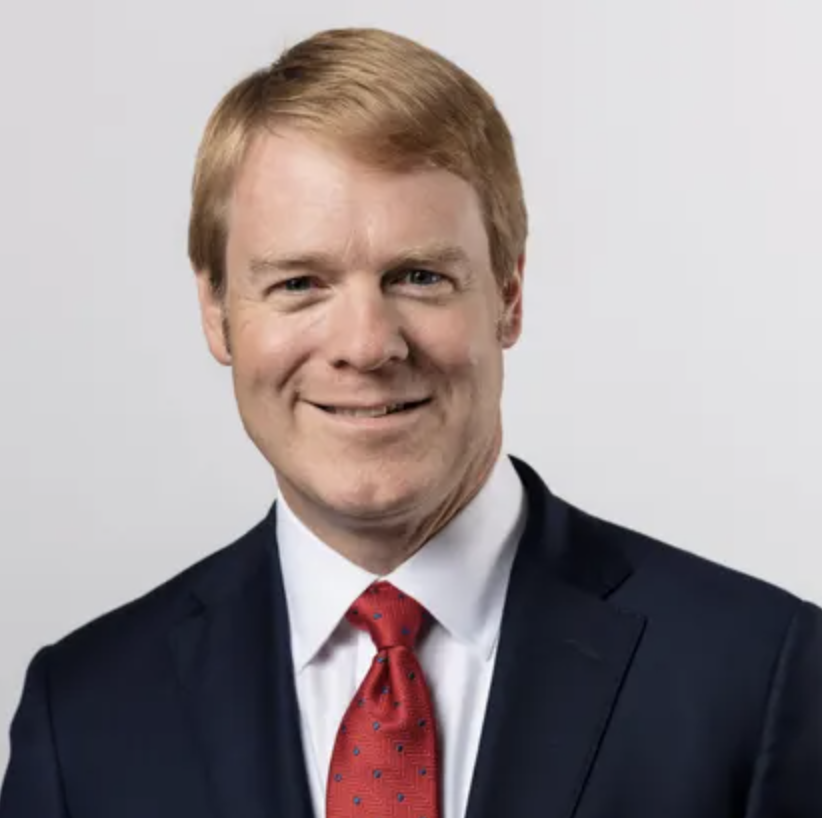 Dr. Christopher Newman
Episode 13 of the Rainfall Health Podcast: Dr. Christopher Newman, President and CEO of Mary Washington Healthcare, with Rainfall Health founder and CEO Ahmed “Eddie” Qureshi.
Dr. Newman is a physician specializing in internal medicine. He served as CMO and COO from 2019 until becoming CEO in March 2025. That path from clinical and operational leadership into the top role frames how he talks about mandatory episode programs, administrative load, and technology under tight margins.
From CMO/COO to CEO
As CMO and COO, Newman stayed close to daily operations and where pain points show up in the organization. As CEO, he says more than half of his time is external: vision and strategy, policymakers, vendors, philanthropy, and fundraising for the mission.
Technology and ROI under pressure
Hospital revenue is squeezed while labor, drugs, supplies, and capital costs rise. Newman looks for six-, seven-, and eight-figure levers that remove bureaucratic work from caregivers—not another dashboard that adds bedside busywork or a heavy IT lift.
Nonprofit providers also face tighter reimbursement and rising cost drivers, including labor markets and malpractice policy, he says.
Waste, margin, and funding the mission
As COO and CMO, much of the opportunity was waste in the care journey: redundant tests, length of stay, and transitions. Compared with 2019 costs on what was then roughly a $1 billion system (now approaching $1.5 billion), that work annualized to on the order of $60 million per year. Teams still chip away at those levers, but the CEO agenda now also requires revenue, EBITDA, and margin.
Mary Washington’s strategic plan invests in oncology, neurosciences, cardiovascular care, and orthopedics to fund behavioral health, primary care, and women’s health. The system serves as a safety-net provider; as fee-for-service revenue erodes, Newman expects revenue diversification beyond payer models alone.
Physician supply in a fast-growing market
The market ranks near the second percentile nationally for physicians per capita. Newman says the system has roughly a thousand physicians on staff but needs about two thousand for the growing population, including a large primary care gap before specialty access. Work focuses on maximizing access with current providers and growing the pipeline, alongside non-clinical procurement where contracts are hard to negotiate at scale.
Partners: problems first, not pitches
Many vendors arrive with “solutions in search of a problem.” Mary Washington is building a venture arm with innovators embedded in teams to match operational problems to proof-of-concept tools, prioritizing immediate value over equity alone.
Peer networks among health system CEOs remain a strong filter: share what delivered eight- or ten-figure ROI, fail fast on pilots that do not, and trade better pricing when a vendor success story helps other communities learn.
Nonprofit obligation
Newman stresses that nonprofit hospitals stand in for whole communities. Mission work often includes foundation-funded support for housing, food insecurity, and safety—obligations that sit alongside margin-producing service lines.
Mandatory episodes (CMS TEAM and CJR-X)
Community partnerships are essential, but Newman does not treat them as a simple ROI lever for mandatory episode programs. Mandatory models shift cost, risk, and administrative burden onto participating health systems. Much of episode spend sits in post-acute settings hospitals do not own, while financial risk stays with the system. Strong performance often means avoiding penalties more than capturing upside.
Mary Washington entered bundled programs voluntarily and built population health capability over years; mandatory TEAM still adds cost and complexity. Newman points to Atul Gawande’s “Cost Conundrum” as an early population-health lens and notes the industry has removed much low-value volume—sometimes by necessity when access is constrained, not by design alone.
On operational cost, he agrees episode programs are expensive to run well. Partners that keep analytics pointed in the right direction help so year-end reconciliation is not a surprise, he says—without every hospital rebuilding the same infrastructure.
Data, AI, and coaching at the elbow
Analytics are non-negotiable, but dashboards can overwhelm. Leadership must choose which measures drive action. Newman wants tools that propose solutions, not only flag problems, because clinicians lack time to interpret every alert.
He cites a length-of-stay partnership that paired real-time analytics with process engineers at the elbow for about fifteen months, then quarterly refresh—behavior change that stayed in the organization after consultants left. Technology plus operational coaching, with future AI nudges, is the model he trusts when incentives align over time.
Therapies, admin relief, and planning ahead
Looking five years out, Newman is optimistic about transformative therapies (he mentions GLP-1 agents and gene therapies as costly but potentially curve-bending) and about technology finally easing documentation and prior authorization—the admin load that consumed more of his clinical day by 2015 than in 2001.
As CEO he plans further ahead than as COO: flexible investments that can pivot, tested against community health. Labor supply remains a constraint, but he remains hopeful that cures and productivity tools can change the cost curve beyond hospital efficiency alone.
More to explore
Download the eBook