
S9
CJR-X model overview · CMS.gov
Start date, procedures, and 90-day episode
Checked November 9, 2026
The CMS Innovation Center's overview page for the CJR Expanded (CJR-X) Model. It explains the problem the model targets, the 90-day episode and the January 1, 2028 nationwide start, and links to the participant list and model documents.
What we say, and what the source says
What we say
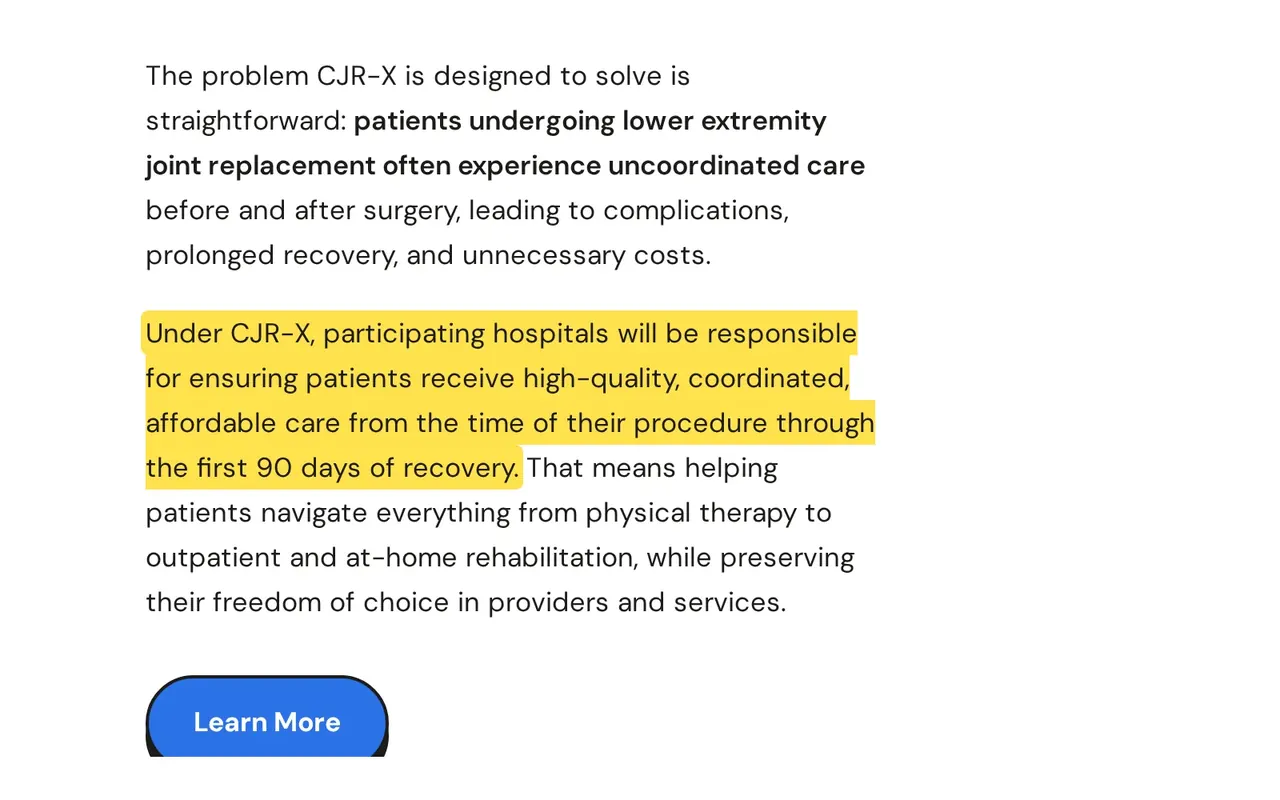
Under CJR-X, participating hospitals will be responsible for ensuring patients receive high-quality, coordinated, affordable care from the time of their procedure through the first 90 days of recovery.
What the source says
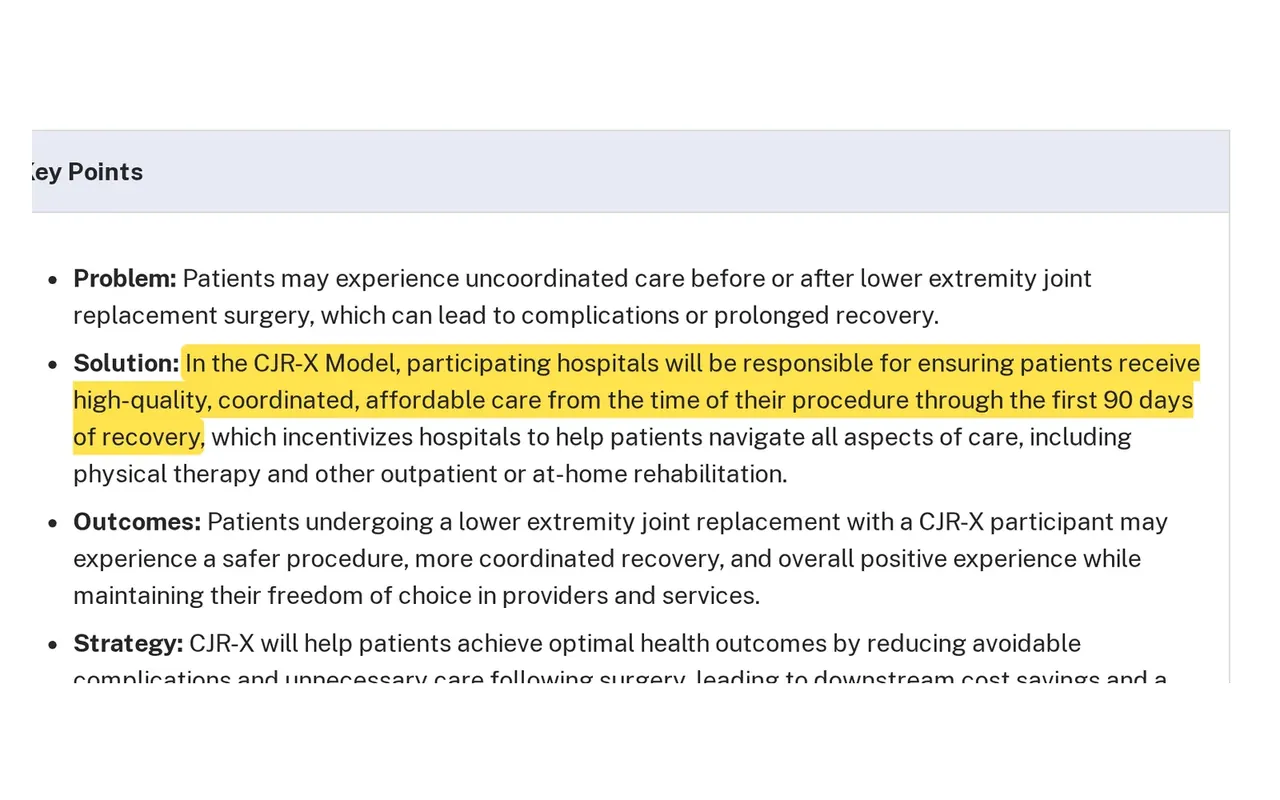
In the CJR-X Model, participating hospitals will be responsible for ensuring patients receive high-quality, coordinated, affordable care from the time of their procedure through the first 90 days of recovery
Our sentence follows CMS's own wording. Both say hospitals are responsible for care from the procedure through the first 90 days of recovery.
What we say
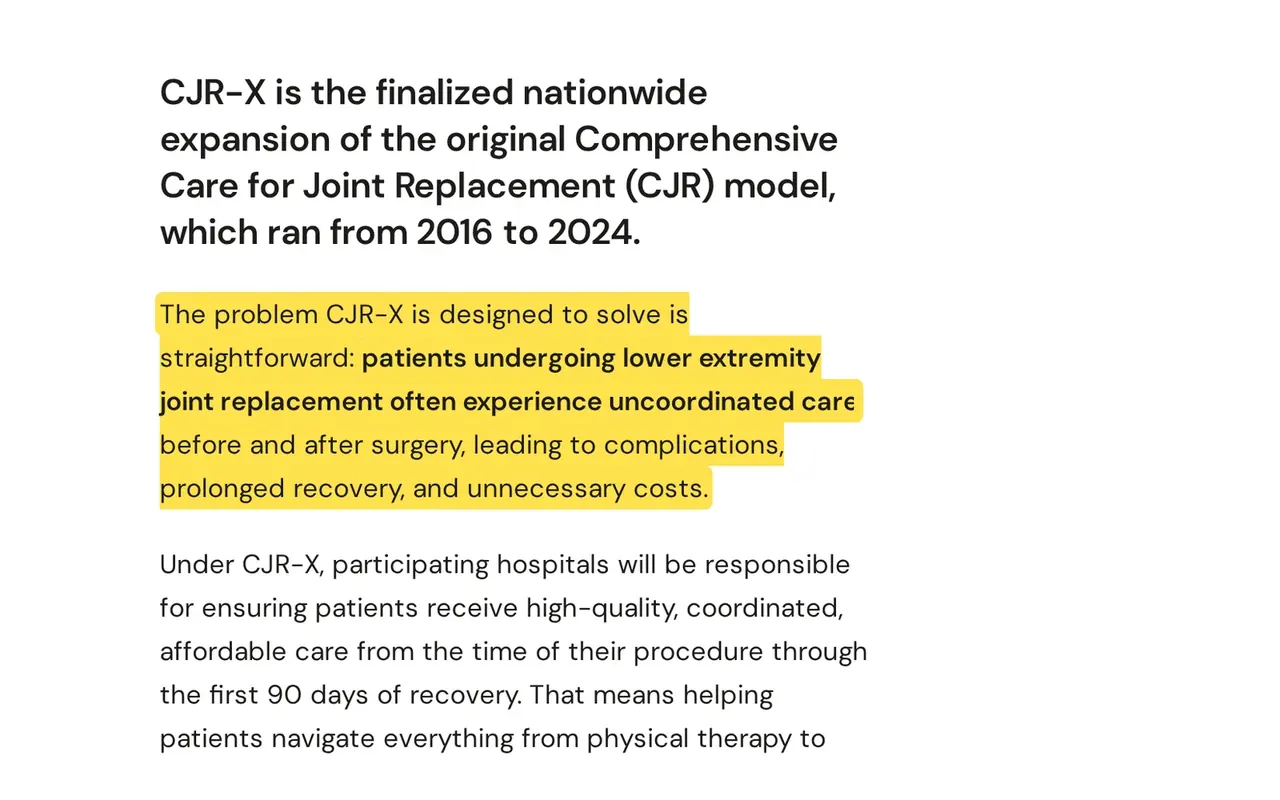
The problem CJR-X is designed to solve is straightforward: patients undergoing lower extremity joint replacement often experience uncoordinated care before and after surgery, leading to complications, prolonged recovery, and unnecessary costs.
What the source says
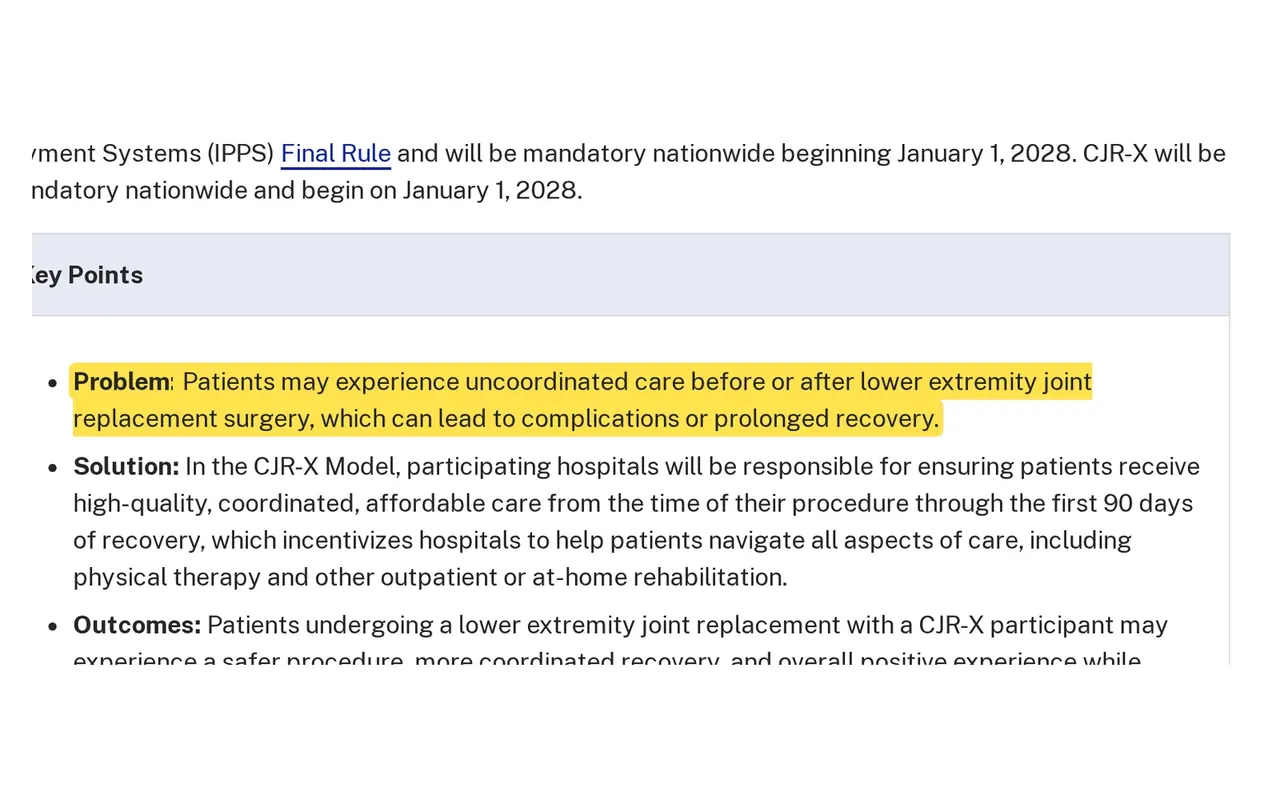
Problem: Patients may experience uncoordinated care before or after lower extremity joint replacement surgery, which can lead to complications or prolonged recovery.
We describe the same problem CMS names: uncoordinated care around joint replacement that can lead to complications or a longer recovery. CMS's sentence does not mention “unnecessary costs”. That part comes from CMS's Strategy line about reducing unnecessary care.
What we say
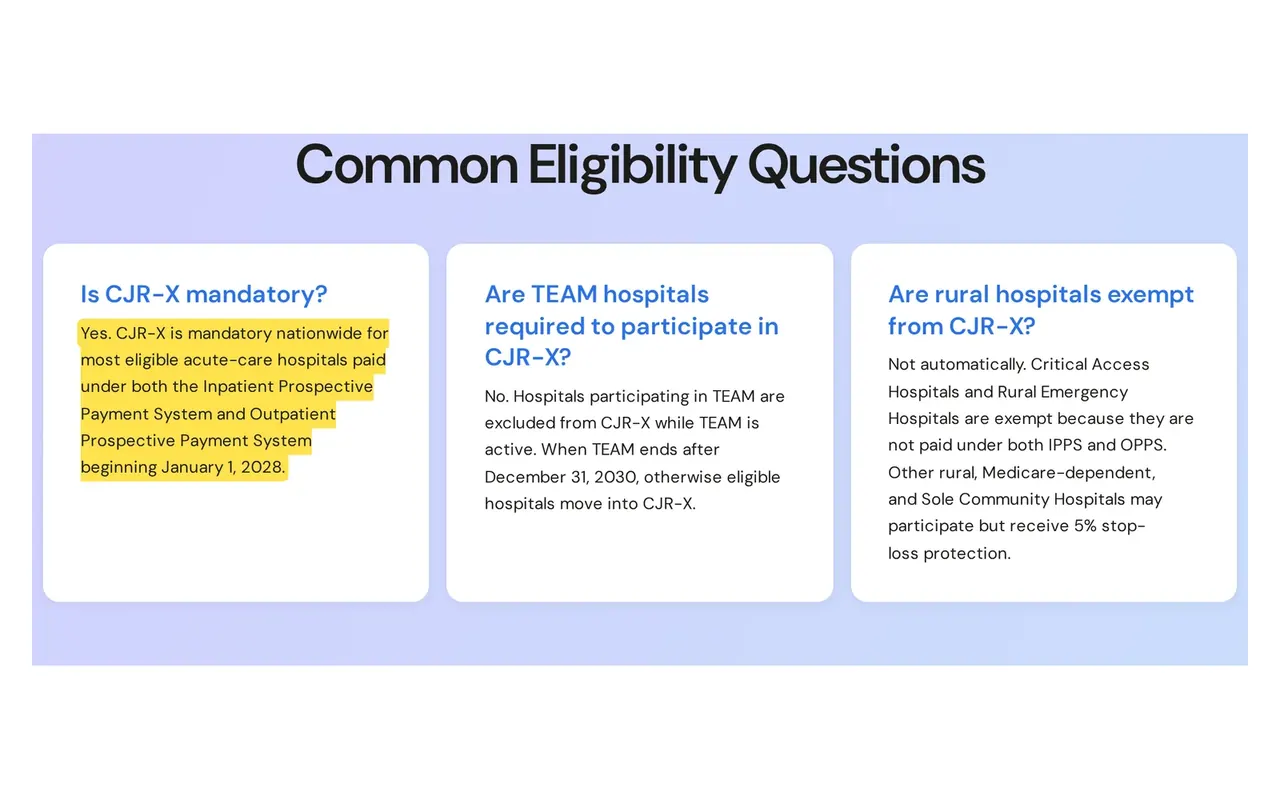
Yes. CJR-X is mandatory nationwide for most eligible acute-care hospitals paid under both the Inpatient Prospective Payment System and Outpatient Prospective Payment System beginning January 1, 2028.
What the source says
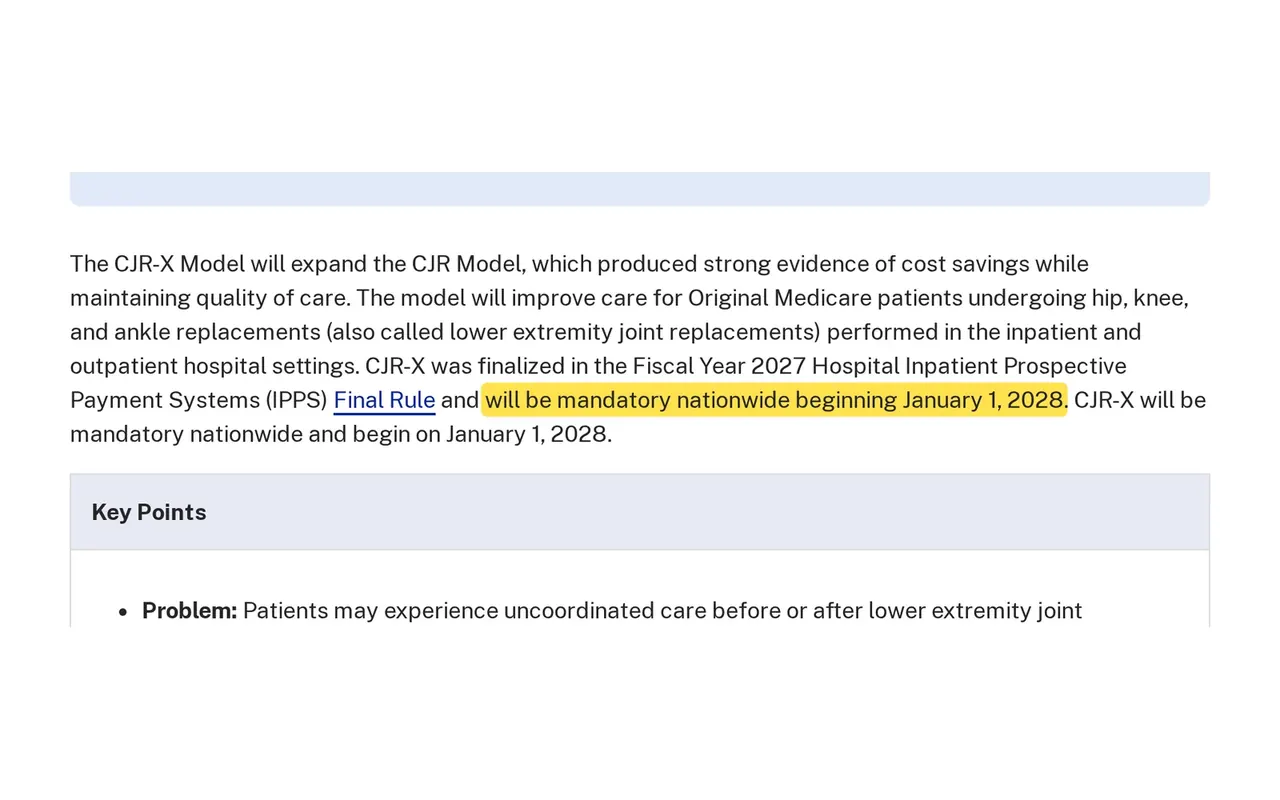
will be mandatory nationwide beginning January 1, 2028
CMS's overview says CJR-X will be mandatory nationwide beginning January 1, 2028, the same start we give.