CMS TEAM Model
Physician Voice, Admin Burden & the Safety Net with Dr. Anthony DiGiorgio
A UCSF neurosurgeon on health IT built for billing, mandatory models like TEAM and CJR-X, and keeping safety net care accessible.

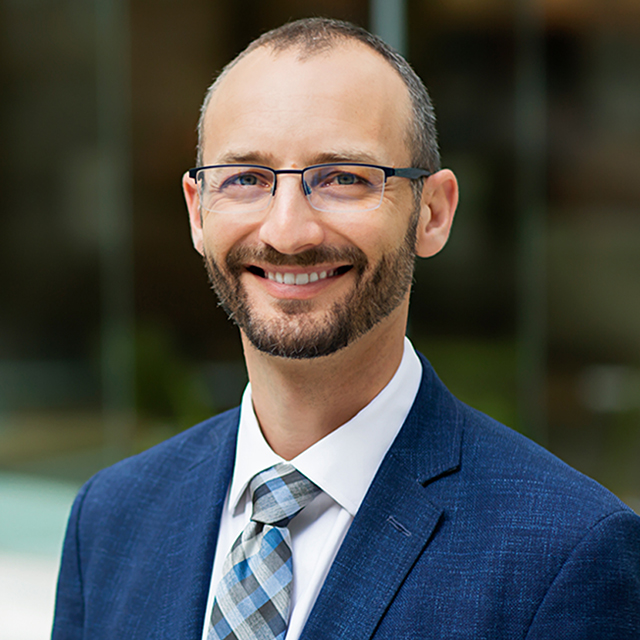

Episode 15 of the Rainfall Health Podcast: Dr. Anthony DiGiorgio, neurosurgeon and associate professor at UCSF, with Rainfall Health founder and CEO Ahmed “Eddie” Qureshi.
In this episode
- 00:00 Introduction
- 00:41 Why a practicing physician belongs in policy
- 02:05 Too much policy: the airline analogy
- 03:42 EHRs are built for billing, not care
- 08:18 Ambient AI and the limits of adoption
- 11:45 TEAM and CJR-X: mandatory bundles
- 13:33 The infrastructure problem after discharge
- 18:13 Data everywhere, synthesis nowhere
- 24:21 Can financial incentives and competition drive good?
- 31:29 Safety net and rural hospitals: the shower story
- 37:21 Safety net innovators and physicians at the table
- 42:29 Operation Warp Speed for healthcare innovation
Dr. Anthony DiGiorgio is a neurosurgeon and associate professor of neurological surgery at UCSF. He treats spinal cord and brain injuries at Zuckerberg San Francisco General Hospital and Trauma Center, where he directs spinal neurotrauma. He also researches Medicaid policy and co-hosts The Doctors’ Lounge, a health policy podcast. In this conversation with Eddie Qureshi, he explains how Medicare payment rules, software, and new mandatory models look from the operating room.
Why frontline physicians belong in policy
DiGiorgio says the policy world has a gap: “There is a dearth of on the ground, boots on the ground, frontline people in the health care policy space.” Many people who write policy, he argues, have never had to work inside the system they are shaping.
For him the link is direct. Much of his day on the computer goes to answering policy: administrative emails and fights with payers. Policy, in his view, should work as a safety net and then get out of the way: “let that patient physician interaction drive what actually happens on the ground.”
Software built for billing
Eddie asks why health care technology lacks the consumer experience found in tools like TurboTax. DiGiorgio’s answer is about who the customer is. Electronic health records are bought by large health systems, not by the clinicians who use them, and they are built around billing rules, quality metrics, and coding. He puts the Medicare physician fee schedule at about 1,500 pages, with the hospital schedule adding roughly another 1,000.
The result, he says, is that a hospital’s goal with its record system is “to submit a clean claim, which is not the same as providing good care.” Digitizing records in the 1990s promised efficiency. What many doctors got instead was a larger administrative load.
AI: cautious optimism, with limits
Eddie points to ambient AI scribes as one of the fastest technology adoptions in U.S. health care. DiGiorgio uses one in his clinic and is “cautiously optimistic”: it has simplified things, but he still has to go back and edit the notes.
The bigger gap is synthesis. A patient can arrive with a chart holding a terabyte of imaging, labs, notes, and wearable data, and no tool yet turns that into a reliable summary for the treating physician. He adds that charts carry errors. A stroke diagnosis entered only to order a scan can stay on the record, and years later that patient shows up in a database query for stroke. He also wants patient data to be portable, and says patients should own it.
Mandatory models: TEAM and CJR-X
Eddie asks about CMS’s mandatory episode models: TEAM, which began January 1, 2026, and CJR-X, which starts in 2028. DiGiorgio expects the large models to be difficult, with “a lot of room for unintended consequences.” He says the CMS Innovation Center has engaged with physicians, including neurosurgery’s Washington Committee, about TEAM.
His main concern is the incentive to select patients. Because the models are built around procedures, a hospital that wants to protect its results “can cherry pick,” declining patients whose risk could hurt its TEAM reimbursement. Refining the risk adjustment, he says, matters for keeping access to care.
He also names an infrastructure problem. Surgeons and hospitals are asked to answer for care after discharge, which they do not control, and many hospitals do not own post-acute facilities. Documentation and coding add staffing costs, particularly when payments are risk adjusted. Eddie’s view is that timing matters: the tools to synthesize data in real time now exist, which makes 30-day episodes more workable than the old 120-to-160-day reconciliation lag.
Safety net and rural hospitals
DiGiorgio has treated safety net patients throughout his career, including at Charity Hospital in New Orleans before San Francisco General. Large systems can absorb inefficiency; safety net hospitals cannot, and when they close or are acquired, patients lose the personal relationship with their care team.
He supports holding these hospitals to a high standard, with a caveat. After a minimally invasive laminectomy, one patient developed repeated infections. “Doc, I live in my car. I don’t have access to a shower,” the patient told him. Outcomes reflect housing, nutrition, and family support as much as surgical technique, and those are hard to measure. If hospitals are penalized for them, “the easy way out is to just not do the surgery on those patients.”
Eddie adds Rainfall’s experience: safety net and rural hospitals have often been among the fastest to invest in new infrastructure, because they know their patients well and the incentives are real.
Competition, and a Warp Speed for health care
DiGiorgio argues that real change needs competition, including more small, physician-led organizations that can adopt tools quickly. He says patients and doctors want the care to be personal, while payers and large systems make most decisions.
His closing ask to CMS is concrete. Operation Warp Speed produced a COVID vaccine quickly; he wants the same for health care innovation: “a model where we’re going to get rid of certificate of need laws,” lift the ban on physician-owned hospitals, and implement site neutrality in some areas, then test the results in a few markets. If those brakes come off, he says, “I think you’d really see those markets explode.”
Listen to the full episode above for the details, including how clinicians can get a seat at the table.
More to explore
Download the eBook